


If you own more than one microbrand watch, there’s a good chance at least one of them ticks thanks to a Miyota movement. For decades, Miyota has been the unglamorous but essential backbone of the affordable and mid-tier watch world, quietly powering everything from your first automatic field watch to that quartz dress piece you reach for on travel days.
Now the company is stepping into the spotlight. In a recent portrait published by Monochrome Watches, Miyota brand manager Yoshio Miura talked about how the company sees its role changing as the industry shifts around it. For a maker that spent most of its life behind the dial, that is a notable change of tone.
The short answer: Miyota is the movement-making arm of Japan’s Citizen Group. It sells automatic and quartz calibers to other brands, which is why the same handful of numbers (8215, 9015, 9039, 9075) keep showing up on spec sheets across the independent watch world.
What is Miyota, exactly?
Miyota is a Japanese movement manufacturer and a subsidiary of Citizen. Its factory was established in the town of Miyota, in Nagano, in 1959. For its first two decades the output served Citizen’s own watches. Around 1980, the company began selling movements to outside brands, and that decision shaped the whole modern landscape of accessible watchmaking.
Citizen itself dates back to 1918, and later added a Swiss layer to its movement business by acquiring La Joux-Perret in 2012. The result is a group that can offer a brand everything from a few-dollar quartz module to a Swiss-made option, which is rare.
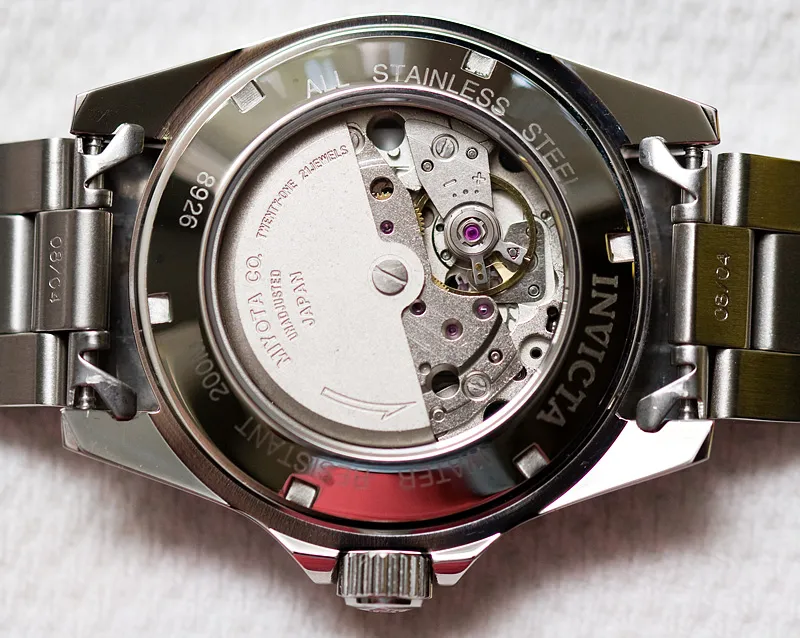
The Miyota calibers you will actually meet
Most microbrand owners only ever run into a short list. Here is how it breaks down.
| Caliber | Type | Beat rate | Power reserve | Why you will see it |
|---|---|---|---|---|
| 8215 | Standard automatic | 21,600 bph | about 42 hours | The budget workhorse of the 2000s and 2010s microbrand boom |
| 8315 | Standard automatic, upgraded | 21,600 bph | longer than 8215 | Same layout as the 8215 with nicer reverse finishing |
| 9015 | Premium automatic | 28,800 bph | about 42 hours | The modern default: 24 jewels, hacking seconds, hand-winding |
| 9039 | Premium automatic, no date | 28,800 bph | about 42 hours | A no-date, lower-profile cousin of the 9015 |
| 9075 | Automatic “true GMT” | 28,800 bph | n/a | Lets you set the local hour independently |
A quick way to read the table: the 8215 is the entry point, and the 9015 is where most serious microbrands land today. The 9015 arrived in 2009 as a development of the 8215, and the jump from 6 to 8 beats per second is why its seconds hand sweeps more smoothly. Miyota quotes its rate as roughly -10 to +30 seconds per day, so it is a dependable daily mover, not a chronometer.
Why do so many microbrands choose Miyota?
Three practical reasons, none of them romantic:
- Availability. You can order Miyota movements in small quantities. A new brand does not need a contract the size of a luxury house to get started.
- Cost. A 9015 costs a fraction of a comparable Swiss movement, which lets small brands spend their budget on case, dial and finishing, the parts you actually see.
- Serviceability. These movements are simple, common and easy to replace, so any competent watchmaker anywhere can look after them.
That last point matters for owners too. A watch is only as long-lived as the ability to service it, and a widely used movement is easier to keep alive in ten years than an obscure one.
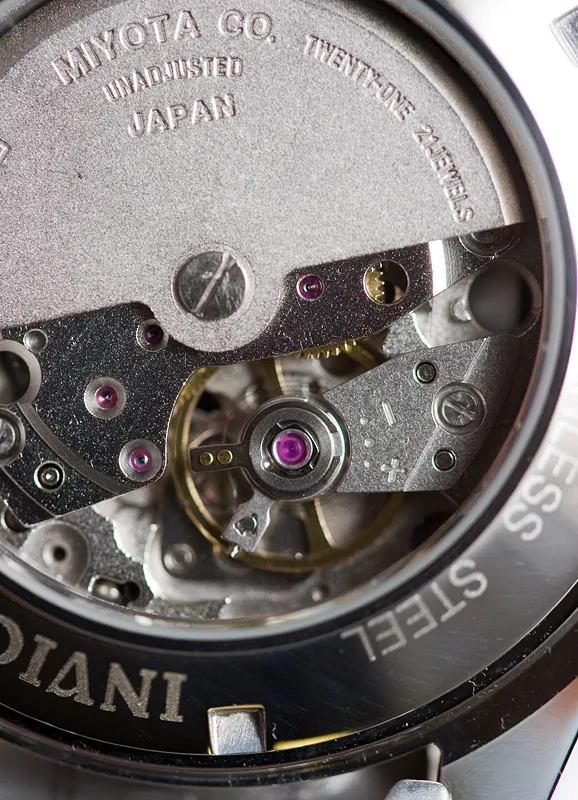
Is a Miyota movement “good enough”?
For most people, yes. Here is the honest version.
- Where it shines: value, reliability, easy servicing, and a strong spec for the money (hacking and hand-winding on the 9015, for example).
- Where it does not: it will not match the finishing or the out-of-the-box regulation of higher-end Swiss movements, and forum debates about accuracy are as old as the movement.
- What good brands do: regulate in-house, upgrade finishing, or customise the rotor. A Miyota base can be a starting point, not a ceiling. Some Japanese independents build their own personality on top of Miyota bases and add serious work in-house.
The takeaway: judge the watch, not the logo on the movement. Plenty of excellent pieces run on a 9015, and plenty of overpriced ones run on something fancier.
Here is our community thoughts about the Miyota movements
Why Miyota’s move into the spotlight matters
For most of its history, Miyota was an invisible supplier. Brands rarely advertised it, and many buyers only found out what was inside after opening a caseback. According to the Monochrome portrait, the company has now attended an enthusiast-facing event for four years in a row, with Miura describing a shift toward speaking to collectors directly instead of staying behind the brands it supplies.
For the microbrand community, that is good news. A supplier that engages with enthusiasts is a supplier that hears what we want: more finishing options, more complications at accessible prices, more transparency. The 9075 true GMT is a hint of where that conversation can go, because it brings a genuinely useful travel complication to a price tier that rarely gets one.
Read the full interview on Monochrome Watches for Miura’s own words on where Miyota wants to go next.
What to check before you buy a Miyota-powered watch
- Ask which exact caliber is inside (8215 and 9015 are very different experiences).
- Check whether the brand regulates the movement or ships it as it arrives.
- Look at warranty and service terms, because the movement is easy to service but the case and crystal may not be.
- Compare the price with the spec. A fair price for a 9015 watch is one where the case, dial and finishing justify the number.
FAQ
Yes. Miyota is part of the Citizen Group and its movements are made in Japan.
Yes. Miyota is Citizen’s movement subsidiary, and it also sells to outside brands.
The 8215 beats at 21,600 vibrations per hour and is the entry-level automatic. The 9015 beats at 28,800 vph, has 24 jewels, and offers hacking and hand-winding, making it the more refined choice.
Miyota’s stated rate is about -10 to +30 seconds per day, which is typical of movements in this class. Many brands regulate it tighter.
They are different tools for different budgets. Miyota is usually the value pick, Sellita is the Swiss alternative, and Seiko’s movements are mostly kept for its own watches.
No. It is a sign of a sensible supplier choice. What matters is how the brand executes the rest of the watch.
Bonus – Community comparison: Does Movement Matter for a Micro? Sellita vs Miyota
Tell us in the comment below what do you think about the Miyota movements and feel free to share your experience.
1 Comment
What is the difference between the Miyota 8215 and the 9015?
The 8215 beats at 21,600 vibrations per hour and is the entry-level automatic. The 9015 beats at 28,800 vph, has 24 jewels, and offers hacking and hand-winding, making it the more refined choice.
The miyota 8 also offers hacking and hand-winding. Another huge difference is thickness which should be noted, and along with beatrate is probably the main point of comparison. Miyota 8 watches are usually a little thicker than idea. 1.77mm difference is significant.
https://movementvalue.com/compare?movements=8000,9000